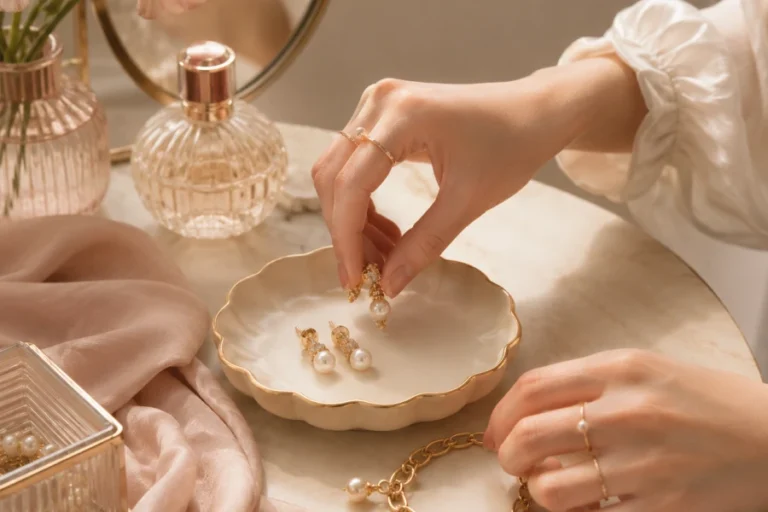
A jewelry storage system should do more than hide clutter. It should protect pieces, prevent tangles, and make everyday styling easier. Many jewelry collections become difficult because everything shares one drawer. Chains knot together. Earrings lose their partners. Rings scratch against bracelets. Occasion pieces bury daily favorites. The right storage plan gives every category a clear place. It also makes maintenance feel manageable. The organized jewelry storage approach turns a messy area into a useful styling station.
Why Jewelry Storage System Planning Begins With Use
Storage works best when it reflects real habits. Daily pieces need immediate access. Occasion pieces need protection and visibility. Travel pieces may need a separate kit. Repairs should not sit beside wearable favorites. Sorting by use prevents daily frustration. It also makes forgotten pieces easier to notice. The goal is not perfect display. The goal is a system that supports getting dressed. Beauty matters, but function keeps the system alive.
Separate Daily Pieces From Occasion Pieces
Daily jewelry should be easy to reach and easy to return. Small trays can hold earrings, rings, and bracelets used often. Occasion jewelry can sit in protected sections. This separation prevents special pieces from creating everyday clutter. It also reduces decision fatigue. The wearer sees what belongs to morning routines first. A clear daily jewelry setup helps favorite pieces stay visible instead of buried.
How Jewelry Storage System Choices Prevent Tangles
Chains need special attention because they tangle quickly. Hanging storage can help when chains are delicate and frequently worn. Divided trays can help when pieces need flat protection. Pendants should not rub against each other constantly. Clasping necklaces before storage can reduce knots. Longer chains may need more space. These small choices save time later. They also protect fine details from damage. Prevention is easier than untangling a drawer every week.
Jewelry Storage System Ideas for Earrings and Rings
Earrings need pairs to stay together. Rings need surfaces that reduce scratches. Bracelets need room, especially rigid bangles. Watches need separation from delicate chains. A storage system should respect each category’s shape. It should also make missing pieces obvious. When everything has a place, disorder becomes easier to catch. This keeps the collection more usable. It also makes styling faster because the eye can scan options without frustration.
Hidden Storage Can Become Hidden Clutter
Closed boxes can protect jewelry, but they can also hide it. Pieces that disappear from view often disappear from outfits. The solution is not always open display. It is thoughtful visibility. Clear sections, labels, and small notes can help. A repair area keeps broken pieces accountable. A travel area prevents last-minute packing stress. The monthly jewelry refresh keeps storage from slowly returning to chaos.
Jewelry Storage System Maintenance Makes Organization Last
Organization fades when it has no rhythm. A monthly reset can restore order quickly. It can reunite earrings, untangle chains, and remove pieces needing repairs. It can also show what has not been worn. Those observations make editing easier. Storage should evolve with the collection. New pieces need roles. Old pieces may need different placement. A lasting system stays flexible. It protects the jewelry while keeping personal style ready for real life.